
 By Ashley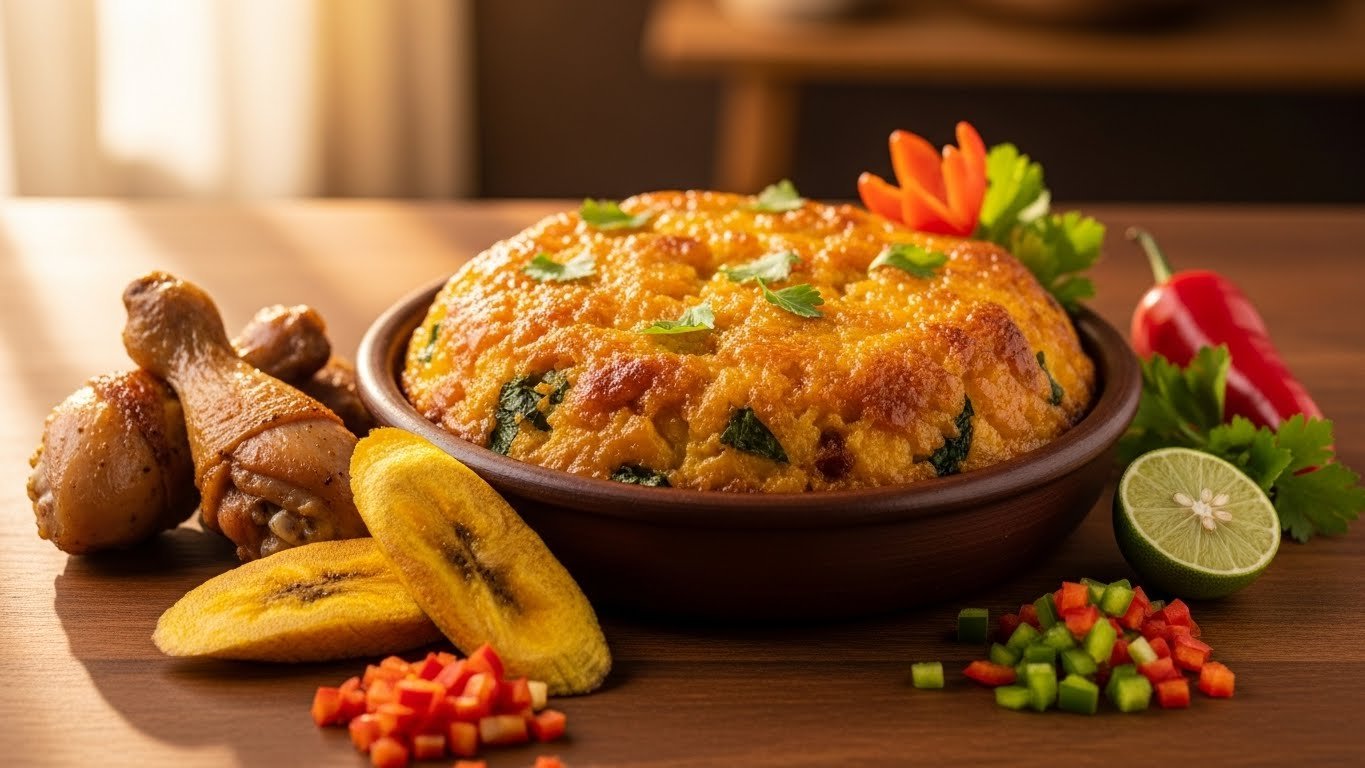
Suriname is a small and culturally rich country on the northeastern coast of South America. Although it’s often celebrated for its lush rainforests and diverse population, one aspect of Surinamese culture that has gained recognition far beyond its borders is its cuisine — particularly a dish called pom. Often described as Suriname’s most iconic festive casserole, pom is a hearty, flavorful dish that has woven itself into the fabric of celebrations, family gatherings, and national pride. Wikipedia
At its core, pom is a baked casserole made from grated root vegetable (pomtajer), layered with seasoned chicken (and sometimes salted meat or other proteins), citrus juice, and a blend of spices, then slow‑baked until golden brown and deeply aromatic. Though the dish’s preparation is straightforward in concept, its cultural significance and the story of how it came to be reflect Suriname’s complex history. Wikipedia+1
Historical Roots: A Fusion of Cultures
The origins of pom are deeply rooted in Suriname’s multicultural past. Suriname’s colonial history brought together Indigenous peoples, African slaves, European settlers, and later indentured laborers from Asia, all of whom contributed to what is today a vibrant culinary landscape. Around the world in 80 cuisines
The earliest recorded description of pom dates back to the 1914–1917 Encyclopedie van Nederlandsch West‑Indië, where it was described as a dish made from grated tajer combined with bitter orange juice and chicken or fish, baked into a pie. Importantly, pom was linked to a version of a European casserole — specifically, a Portuguese‑Jewish oven dish made with potatoes called “pomme de terre.” Wikipedia
Suriname’s tropical climate prevented potatoes from thriving, so local cooks replaced them with the root of the tayer plant (Xanthosoma sagittifolium), which grows abundantly in the region. This adaptation — substituting indigenous ingredients for imported ones — is emblematic of Surinamese cuisine as a whole. Wikipedia
Thus, pom emerged as a hybrid creation: European technique and structure, African and Indigenous ingredients and sensibilities. Today it is celebrated as uniquely Surinamese — a dish born of adaptation, creativity, and cultural interplay. International Cuisine
What Is Pom? Ingredients and Preparation
At its most basic, pom consists of three central components:
-
Pomtajer: A starchy root vegetable locally known as pomtajer — essentially the corm of the tayer plant. It is grated and mixed with citrus juice to create the casserole’s base and top layer.
-
Meat: Typically chicken, though variations may include salted beef or other meats.
-
Seasonings: A bouquet of onions, tomatoes, celery, spices like nutmeg and black pepper, and citrus juice (often from bitter oranges or lemons). Wikipedia+1
The preparation involves layering grilled or sautéed chicken and its sauce between layers of the grated pomtajer. The citrus juice helps bind the grated root and balances the richness of the meat. Once assembled in an oven dish, the casserole is baked slowly until the top turns a beautiful golden‑brown crust and the heart of the dish becomes rich and flavorful. opreisdoorsuriname.sr</span>
While recipes vary from household to household, the process is always one of patience and care — reflecting the importance of pom not just as a meal, but as a communal act of cooking. Smaack
A Dish for Festivities and Everyday Life
In Suriname, pom is more than food — it is tradition. There’s a saying among many Surinamese: “Without pom, there is no birthday.” This phrase encapsulates how central the dish has become to celebrations such as birthdays, weddings, anniversaries, and other gatherings. The dish’s presence signals festivity, warmth, and generosity. International Cuisine
Pom is often served with simple sides like rice or vegetables, allowing its rich flavors to stand at the center of the meal. It’s described as a dish of comfort and pride — something that evokes nostalgia for those who grew up eating it at family celebrations. International Cuisine
Beyond formal events, pom also finds its way into everyday Surinamese life in transformed forms. In Suriname and in Surinamese communities abroad (especially in the Netherlands), pom may be served in sandwiches, known as broodje pom — grated casserole served inside a bread roll. This portable version has become a beloved snack or lunch option. Smaack+1
Cultural Significance and Identity
Suriname’s rich cultural mosaic includes influences from Indigenous peoples, Africans brought through the trans‑Atlantic slave trade, European colonizers, and indentured laborers from India, Indonesia, and China. Pom reflects this fusion — European casserole concepts adapted with local ingredients, prepared and transformed by African, Creole, and other Surinamese cooks. Around the world in 80 cuisines
For many Surinamese, pom represents home. Suriname has experienced significant emigration, particularly to the Netherlands, where vibrant Surinamese communities continue traditions and preserve culinary heritage. In Dutch cities like Amsterdam, Rotterdam, and The Hague, numerous restaurants, cafes, and caterers serve pom alongside other Surinamese dishes — a testament to its enduring popularity. Wikipedia
In this diaspora context, pom often becomes a touchstone of cultural identity. For those far from Suriname, the aroma and taste of pom can spark memories of childhood, family gatherings, and community celebrations. The dish serves as a reminder of origins and shared heritage, bridging distances between continents. Wikipedia
Debates About Origins and Identity
While many embrace pom as Suriname’s national dish, this classification is sometimes debated. Suriname is hyper‑diverse, with each ethnic group having its own signature dishes — from Indo‑Surinamese roti and nasi to Javanese fried rice (nasi goreng) and Creole moksi alesi (mixed rice). Some argue there is no single national dish because the nation’s identity is shared across many culinary traditions. Reddit
Nonetheless, pom remains one of the most widely recognized and beloved. Its history — part European, part indigenous, part African, and wholly Surinamese — encapsulates the very essence of Suriname’s multicultural identity. Wikipedia
Variations and Modern Adaptations
Like many traditional dishes, pom is not monolithic. There are countless family variations — some include salted beef, others add piccalilli for tang, and still others incorporate different root vegetables if pomtajer is unavailable. International Cuisine+1
In the Netherlands and beyond, cooks often adapt pom to available ingredients, substituting taro, cassava, or even potatoes when pomtajer is hard to find. Some versions use additional spices, while others lean into fusion influences, reflecting the global reach and versatility of the dish. Tokogembira.nl
Modern broodje pom versions have also emerged — from panini‑style sandwiches to gourmet interpretations served in upscale restaurants. These adaptations highlight how pom continues to evolve while remaining deeply rooted in tradition. Smaack
The Experience of Making Pom
Preparing pom can be a social event — families often gather to grate the pomtajer, marinate the chicken, and share stories while assembling the layers of the casserole. The extended cooking time — often several hours in the oven — allows families to spend time together, reinforcing bonds and creating memories. opreisdoorsuriname.sr</span>
For many home cooks, mastering pom is a rite of passage — a milestone in understanding and preserving Surinamese culinary tradition. Passing down the recipe from one generation to the next is as much an act of cultural preservation as it is of feeding loved ones. Wikipedia
Conclusion: A Dish That Tells a Story
Pom is more than a casserole — it is a narrative on a plate. Through its layers of grated root, tender chicken, bright citrus, and rich spices, it tells the story of Suriname’s history: its colonial past, its interwoven cultures, and its resilient creativity. Wikipedia
Whether enjoyed at a grand celebration, served as a simple lunch, or savored by Surinamese communities far from home, pom remains a testament to the power of food to connect people to place, memory, and identity. Its popularity is a reflection of Suriname itself — diverse, vibrant, adaptable, and deeply proud of its culinary heritage.