
 By Ashley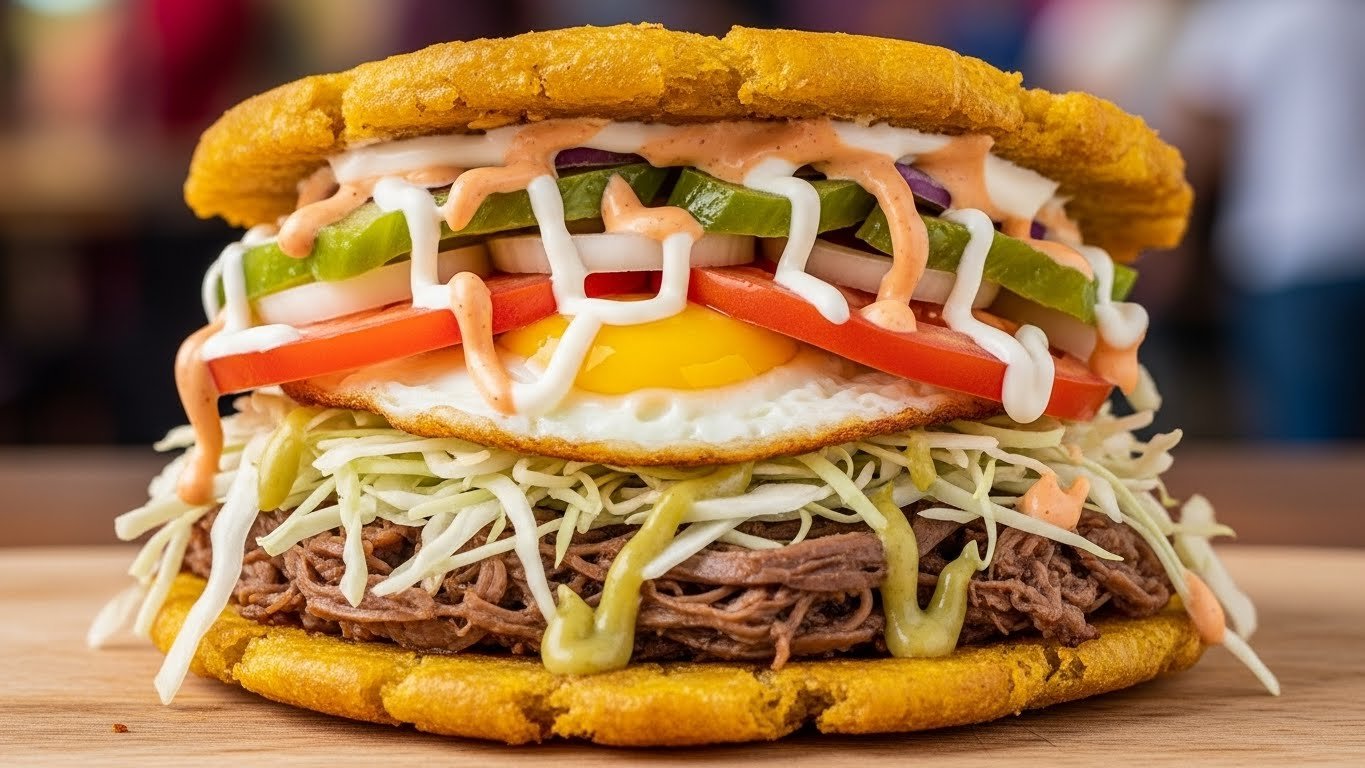
The patacón zuliano is more than a dish—it is a cultural emblem of western Venezuela, especially the state of Zulia, where food is bold, portions are generous, and flavors are unapologetically rich. Built around twice-fried green plantains instead of bread, the patacón zuliano is a towering sandwich layered with meats, sauces, cheese, and fresh toppings. Crispy on the outside, tender on the inside, and overflowing with fillings, it reflects the personality of Maracaibo and its people: vibrant, expressive, and unforgettable.
Origins and Cultural Roots
The patacón itself has deep roots across Latin America and the Caribbean, where fried green plantains are a staple. However, the Zulian version is unique. While patacones in other regions are often served as side dishes or bases for small toppings, Zulia transformed the patacón into a full-scale sandwich—massive, indulgent, and meant to be eaten with both hands.
This transformation is closely tied to Maracaibo’s street food culture. Vendors sought to create something filling, affordable, and irresistible for late-night diners. By replacing bread with crispy plantains and stacking multiple proteins and sauces inside, they created a dish that quickly became legendary. Today, the patacón zuliano is a must-eat for locals and visitors alike.
What Makes a Patacón Zuliano Unique?
At its core, the patacón zuliano consists of two large, flattened green plantains that act as the “bun.” These plantains are fried twice: first to soften them, then flattened, and fried again until golden and crisp. The result is a sturdy yet flavorful base capable of holding generous fillings.
What truly sets the Zulian version apart is:
-
Size and abundance – It is famously large and filling
-
Multiple proteins – Beef, chicken, pork, sausage, bacon, or combinations
-
Signature sauces – Especially garlic sauce and pink sauce
-
Local cheese – Often queso palmita or shredded white cheese
-
Street-food spirit – Casual, messy, and deeply satisfying
This is not a minimalist dish. The patacón zuliano celebrates excess—in the best way possible.
Core Ingredients
While variations abound, a traditional patacón zuliano usually includes the following components:
Green Plantains
Unripe plantains are essential. Their starchiness allows them to crisp beautifully and hold their shape.
Proteins
Common choices include:
-
Shredded beef (carne mechada)
-
Grilled or shredded chicken
-
Fried pork or chicharrón
-
Sausages or hot dogs
-
Bacon
Many versions combine two or more meats for extra richness.
Cheese
Zulian cheeses are mild and slightly salty. Queso palmita, queso rallado (shredded white cheese), or even mozzarella may be used.
Vegetables
Freshness balances the richness:
-
Lettuce or cabbage
-
Tomato slices
-
Sometimes onions or sweet corn
Sauces
Sauces are crucial and often homemade:
-
Garlic sauce (salsa de ajo)
-
Pink sauce (ketchup + mayonnaise)
-
Mustard
-
Hot sauce or chili sauce (optional)
How Patacón Zuliano Is Made
The preparation process is simple in concept but requires care:
-
Peel and slice green plantains lengthwise
-
First fry until softened but not browned
-
Flatten using a press or flat surface
-
Second fry until golden and crispy
-
Assemble by layering meats, cheese, vegetables, and sauces
-
Top with the second plantain, pressing gently to hold everything together
The finished patacón is often wrapped in paper and served immediately while hot and crisp.
Popular Variations
The patacón zuliano has evolved, and today you’ll find countless versions across Venezuela and beyond:
Patacón Mixto
A combination of beef and chicken, often the most popular choice.
Patacón de Carne Mechada
Filled exclusively with Venezuelan-style shredded beef, rich and savory.
Patacón de Pollo
Lighter but still hearty, using seasoned shredded chicken.
Patacón con Todo
The ultimate indulgence—multiple meats, bacon, cheese, and all sauces.
Vegetarian Patacón
Filled with grilled vegetables, beans, cheese, and sauces, catering to modern tastes.
A Symbol of Zulian Identity
In Zulia, food is closely tied to identity, and the patacón zuliano stands alongside dishes like arepas and mandocas as a regional treasure. It represents resourcefulness—using local ingredients creatively—and hospitality, as it is meant to satisfy hunger completely.
Eating a patacón is often a social experience. Friends gather at street stands late at night, sharing laughter while tackling these oversized sandwiches. It’s messy, informal, and joyful—much like Zulian culture itself.
Street Food to Restaurant Menus
While the patacón zuliano began as street food, it has successfully made its way into restaurants, food trucks, and international Venezuelan eateries. Chefs now experiment with gourmet fillings, premium meats, and artisanal sauces, while still respecting the dish’s rustic roots.
Outside Venezuela, especially in countries with large Venezuelan diasporas, the patacón zuliano has become a nostalgic comfort food, reminding people of home.
Nutritional Perspective
The patacón zuliano is undeniably indulgent. Fried plantains, multiple meats, cheese, and sauces make it calorie-dense. However, it also provides:
-
Energy from complex carbohydrates
-
Protein from meats and cheese
-
Some fiber and vitamins from plantains and vegetables
Like many traditional dishes, it’s best enjoyed in moderation and as part of a balanced diet.
Why Patacón Zuliano Remains So Popular
Several factors explain its lasting appeal:
-
Texture contrast – Crispy plantains with juicy fillings
-
Bold flavors – Savory, salty, creamy, and sometimes spicy
-
Customization – Endless combinations to suit every taste
-
Emotional connection – Strong ties to regional pride and memories
Few foods deliver such immediate satisfaction with every bite.
Patacón Zuliano in Modern Food Culture
Today, the patacón zuliano has found new life on social media, where its size and layered fillings make it visually irresistible. Food bloggers and travelers often highlight it as one of Venezuela’s most iconic street foods.
Despite trends toward lighter or minimalist cuisine, the patacón zuliano endures because it offers something timeless: comfort, abundance, and flavor without compromise.
Conclusion
The patacón zuliano is far more than a sandwich made with plantains. It is a culinary statement—bold, generous, and deeply rooted in Zulian tradition. From its crispy plantain “bread” to its overflowing layers of meat, cheese, and sauces, it captures the heart of Venezuelan street food culture.
Whether enjoyed on a bustling Maracaibo street corner or recreated in kitchens around the world, the patacón zuliano continues to bring people together through flavor, tradition, and shared joy. It stands as delicious proof that some of the most memorable foods come from simple ingredients elevated by creativity and cultural pride