 By Ashley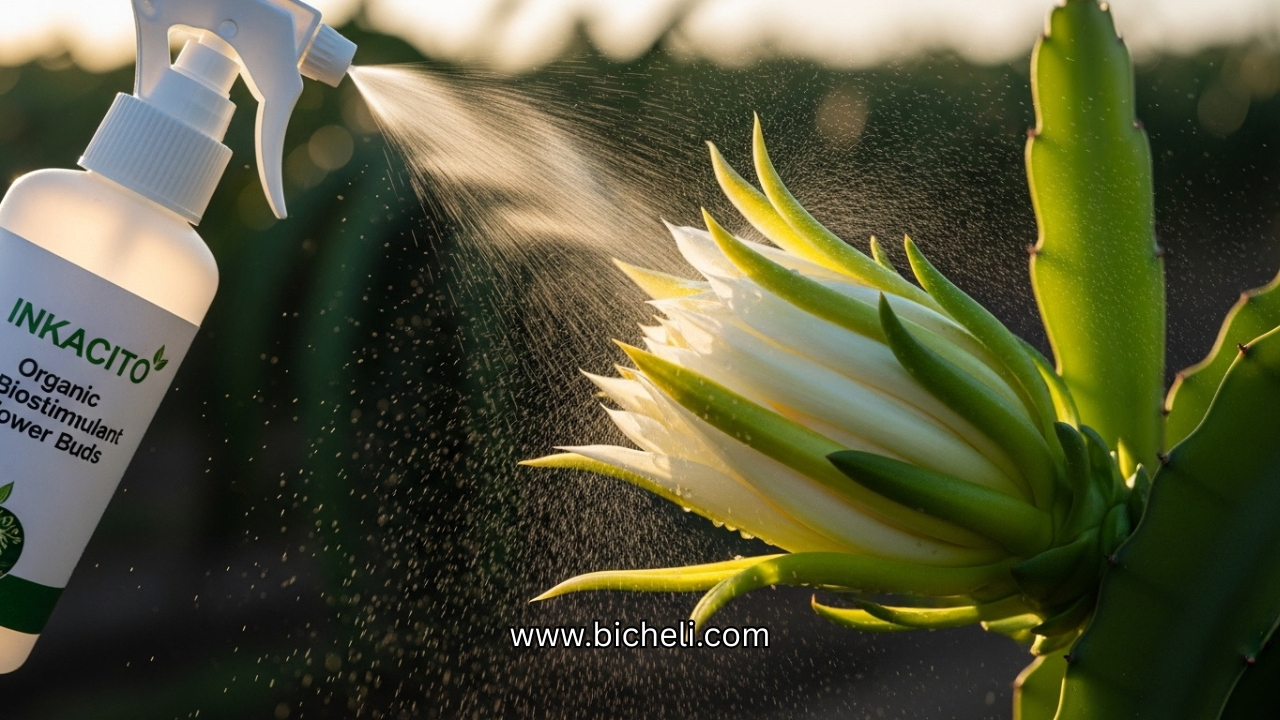
Dragon fruit, also known as pitahaya, has become one of the most valuable tropical fruits in modern agriculture. With rising global demand, growers are constantly searching for sustainable ways to improve flowering, fruit set, and overall crop productivity. One of the biggest challenges in pitahaya cultivation is achieving consistent and abundant flower bud emission, especially in premium varieties such as Golden and Undatus.
This is where Inkacito, an organic agricultural biostimulant, plays a vital role. Designed specifically to stimulate flower bud development, Inkacito supports healthier flowering cycles while aligning with environmentally responsible farming practices. In this article, we’ll explore what Inkacito is, how it works, and why it has become an essential tool for dragon fruit growers worldwide.
Understanding Pitahaya Flowering Challenges
Pitahaya is a climbing cactus that requires specific physiological and environmental conditions to initiate flowering. While the plant is hardy, flowering can be irregular due to several factors, including:
-
Nutrient imbalance
-
Temperature fluctuations
-
Stress caused by drought or excessive moisture
-
Poor hormonal signaling within the plant
-
Inadequate crop management practices
Even healthy-looking plants may fail to produce sufficient flower buds, directly affecting yield and profitability. Traditional chemical solutions can offer short-term results, but they often come with long-term soil degradation and environmental concerns. Organic biostimulants like Inkacito provide a more sustainable and effective alternative.
What Is Inkacito?
Inkacito is an organic agricultural biostimulant formulated to induce flower bud emission in pitahaya crops. Unlike conventional fertilizers, Inkacito does not simply supply nutrients; instead, it enhances the plant’s natural physiological processes to encourage flowering.
Inkacito is particularly effective for:
-
Dragon fruit (Pitahaya)
-
Golden pitahaya varieties
-
Undatus (Hylocereus undatus)
Its organic formulation makes it suitable for growers focused on sustainable agriculture, organic certification, and long-term soil health.
How Inkacito Works as a Biostimulant
Biostimulants operate differently from fertilizers and pesticides. Inkacito works by activating internal plant mechanisms that regulate growth and flowering.
1. Hormonal Stimulation
Inkacito supports the production and balance of natural plant hormones responsible for flower induction. This helps trigger flower bud initiation at the right growth stage.
2. Stress Reduction
Environmental stress is a major cause of poor flowering. Inkacito enhances the plant’s stress tolerance, allowing it to allocate more energy toward reproductive growth rather than survival.
3. Improved Nutrient Utilization
While Inkacito is not a fertilizer, it improves nutrient uptake and efficiency. Plants absorb and use existing nutrients more effectively, supporting healthier bud formation.
4. Enhanced Metabolic Activity
Inkacito stimulates metabolic processes that promote cell division and differentiation—key factors in the development of flower buds.
Benefits of Inkacito for Pitahaya Crops
Consistent Flower Bud Emission
One of the primary advantages of Inkacito is its ability to promote uniform and predictable flowering cycles. This consistency allows farmers to better plan harvests and market supply.
Increased Yield Potential
More flower buds generally lead to more fruits. By improving bud initiation, Inkacito indirectly boosts overall yield without overburdening the plant.
Improved Fruit Quality
Healthier flowering often results in better fruit size, color, and sweetness. This is especially important for export-quality dragon fruit.
Organic and Eco-Friendly
Inkacito’s organic composition supports soil health, microbial activity, and sustainable farming systems, making it ideal for environmentally conscious growers.
Suitable for Premium Varieties
Golden and Undatus pitahaya varieties are particularly responsive to biostimulant treatments, and Inkacito has shown strong compatibility with these high-value crops.
Inkacito and Sustainable Agriculture
Modern agriculture is shifting toward sustainability, and biostimulants are at the heart of this transition. Inkacito aligns perfectly with sustainable farming goals by:
-
Reducing dependence on synthetic chemicals
-
Supporting long-term soil fertility
-
Enhancing plant resilience naturally
-
Lowering environmental impact
For organic-certified farms or growers aiming to meet international export standards, Inkacito offers a compliant and effective solution.
Application Timing and Best Practices
While application methods may vary depending on local conditions and formulations, Inkacito is generally most effective when applied during key vegetative stages before flowering.
Best Timing
-
Prior to the expected flowering period
-
During active vegetative growth
-
When plants show signs of delayed or weak flowering
Integration with Crop Management
Inkacito works best when combined with:
-
Balanced nutrition programs
-
Proper irrigation management
-
Adequate pruning and trellising
-
Regular crop monitoring
It should be viewed as part of a holistic crop management strategy rather than a standalone solution.
Inkacito vs Traditional Flowering Inputs
Traditional chemical flowering stimulants often deliver quick results but may weaken plants over time. Inkacito offers a different approach.
| Aspect | Traditional Chemicals | Inkacito |
|---|---|---|
| Origin | Synthetic | Organic |
| Soil impact | Can degrade soil | Improves soil health |
| Plant stress | May increase stress | Reduces stress |
| Sustainability | Low | High |
| Long-term benefits | Limited | Consistent and cumulative |
This makes Inkacito a smarter long-term investment for commercial pitahaya producers.
Economic Advantages for Growers
Beyond agronomic benefits, Inkacito provides economic value:
-
Higher marketable yields
-
Improved fruit quality and pricing
-
Reduced input costs over time
-
Better return on investment
Consistent flowering also allows growers to better align production with market demand, reducing waste and price volatility.
Role of Inkacito in Golden and Undatus Varieties
Golden and Undatus pitahaya varieties are prized for their flavor, appearance, and export value. However, they are also sensitive to environmental changes.
Inkacito supports these varieties by:
-
Encouraging timely bud initiation
-
Improving flowering uniformity
-
Supporting plant vigor during critical stages
This makes it an ideal choice for growers targeting premium markets.
Future of Biostimulants in Pitahaya Farming
As global agriculture continues to evolve, biostimulants like Inkacito are becoming essential tools rather than optional inputs. With increasing pressure to produce more food sustainably, solutions that enhance natural plant processes will dominate the future of farming.
Inkacito represents this new generation of agricultural inputs—effective, organic, and aligned with long-term productivity goals.
Conclusion
Inkacito stands out as a reliable and organic biostimulant designed to address one of the most critical challenges in pitahaya cultivation: flower bud emission. By enhancing natural plant processes, reducing stress, and supporting sustainable agriculture, Inkacito helps dragon fruit growers achieve consistent flowering, improved yields, and better fruit quality.
For farmers cultivating Golden and Undatus pitahaya varieties, Inkacito offers a powerful yet eco-friendly solution that fits seamlessly into modern crop management systems. As demand for dragon fruit continues to grow, tools like Inkacito will play a key role in ensuring productive, profitable, and sustainable farming.