
 By Ashley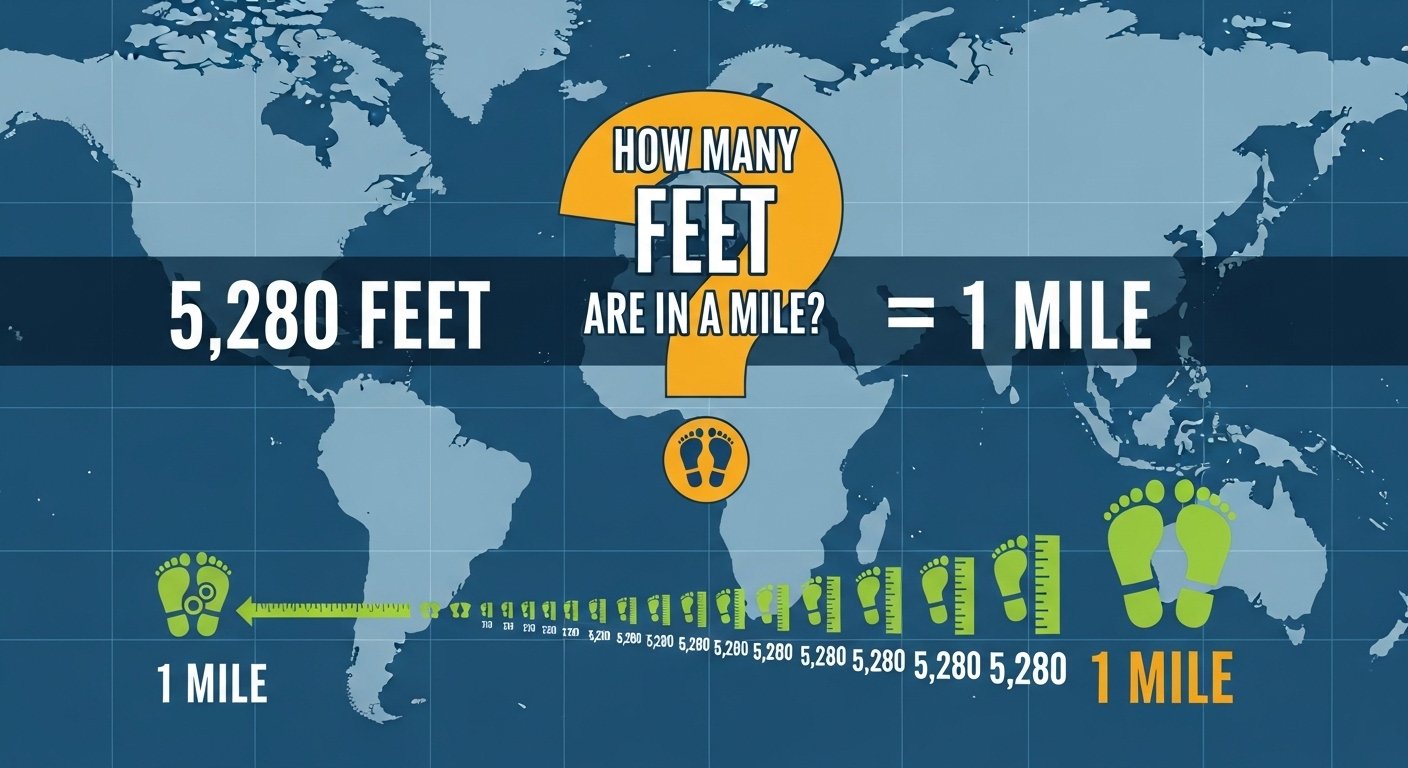
Distances shape our world, guiding us from one place to another. Whether you’re planning a road trip or measuring your morning jog, understanding distances is essential. But how do we make sense of them? Enter the mile and the foot—two units that often come into play in daily life.
Have you ever wondered how many feet are in a mile? This simple question opens up a treasure trove of information about measurement systems and their history. With miles used predominantly in the United States and some other countries, while feet serve as a more universal measurement tool, knowing these details can enhance your navigation skills.
Join us on this journey to unpack distances, explore conversions between miles and feet, and discover why grasping these concepts is vital for everyday activities. Let’s dive deeper into this fascinating topic!
What is a mile and its history
A mile is a unit of length commonly used in the United States and the United Kingdom. It measures approximately 5,280 feet. The word “mile” originates from the Latin term “mille passus,” which means “a thousand paces.”
Historically, this measurement was based on Roman soldiers’ steps—two paces for every complete step taken by each soldier. As time progressed, it became standardized.
The mile as we know it today was formally established in England during the 16th century when various local measurements were consolidated. This contributed to its widespread adoption across different regions.
With developments in transportation and land surveying, understanding miles gained importance. Its use has become integral not only in travel but also in mapping out distances for various activities like running or hiking.
Conversion of feet to miles and vice versa
Converting feet to miles is straightforward. There are 5,280 feet in a mile. This means that to convert from feet to miles, you simply divide the number of feet by 5,280.
For example, if you have 10,560 feet and want to know how many miles that is, just divide: 10,560 ÷ 5,280 equals 2 miles.
On the flip side, converting miles back into feet involves multiplication. For every mile you want to convert into feet, multiply it by 5,280.
So if you’re curious about how far three miles are in terms of feet? Just do the math: 3 x 5,280 gives you an impressive total of 15,840 feet.
These conversions come in handy for various activities like running events or road trips where distances may be presented differently.
Importance of understanding distances in daily life
Understanding distances is crucial in our daily lives. It influences how we plan our routes, whether driving to work or walking to the store. Knowing the distance can help us estimate travel times and manage schedules effectively.
Distances also play a vital role in fitness. Whether you’re tracking your running progress or measuring a bike ride, being aware of miles helps set achievable goals.
In cooking, recipes often use measurements that relate to distance for ingredient quantities and cooking times. A clear grasp of these concepts ensures you won’t overestimate or underestimate what you need.
Additionally, distances matter when it comes to real estate decisions. Understanding square footage versus acres can impact buying choices and investments significantly.
Being mindful of distances enhances communication too; expressing them accurately makes interactions smoother—whether discussing directions with a friend or sharing travel plans with family.
Fun facts about miles and feet
Did you know that a mile is comprised of 5,280 feet? It’s a number often quoted but not always remembered. This measurement dates back to ancient Rome when it was defined as 1,000 paces.
Another interesting tidbit: the word “mile” comes from the Latin term “milia,” meaning a thousand. This reflects its original connection to pacing.
Feet have their own quirks too. In medieval England, a foot was based on the average length of human feet at that time—quite subjective!
Additionally, in sports like running and cycling, distances are frequently measured in miles or feet for simplicity and clarity.
And here’s something fun: If you’re ever hiking up hills, remember one mile uphill can feel much longer than just 5,280 feet due to elevation change!
Real-world examples of distances in miles and feet
When you think about a mile, consider that it’s roughly 18 city blocks. In many urban areas, walking a mile can mean exploring new shops or cafes along the way.
Imagine running on a track; one lap is often a quarter of a mile. If you’re training for an event, you’d run four laps to cover that full distance.
Road trips provide another perspective. A typical drive between cities might be expressed in miles—like the 300-mile journey from Los Angeles to San Francisco. That’s about 1,584,000 feet!
For outdoor enthusiasts, hiking trails may list distances in miles too. A popular hike could advertise as being five miles long—a commitment but rewarding with stunning views at the summit.
These examples illustrate how we encounter distances daily and why understanding them enriches our experiences!
Conclusion: Why knowing how many feet are in a mile matters
Understanding the conversion between feet and miles is more than just a math exercise. It allows us to grasp distances better in our daily lives, whether we’re planning a road trip or measuring our running routes.
Knowing that there are 5,280 feet in a mile helps you visualize how far you’ve traveled or how much further you have to go. This knowledge can enhance your appreciation of the vastness of landscapes or just help with practical tasks like estimating time for a journey.
This understanding also plays an essential role in various fields such as construction, travel logistics, and sports. Comprehending how many feet are in a mile empowers you to navigate your world more confidently and effectively.