
 By Ashley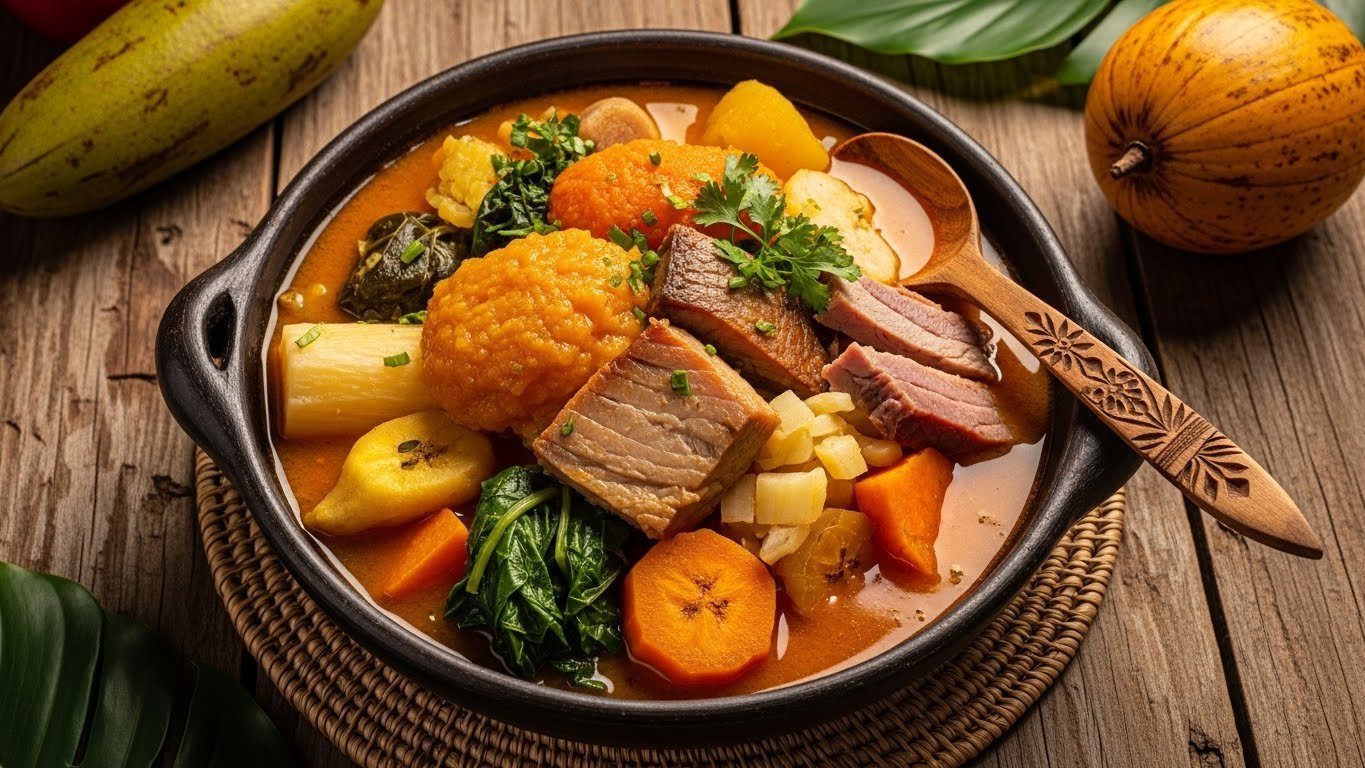
Bouillon d’Awara is far more than a soup. It is a cultural emblem, a ceremonial dish, and a powerful symbol of heritage in French Guiana and parts of the Amazon basin. Rich, complex, and deeply rooted in Indigenous, African, and Creole traditions, this dish embodies history, spirituality, and communal identity. Often prepared during Easter, Bouillon d’Awara is considered one of the most meaningful and elaborate dishes in Guianese cuisine.
At its heart lies the awara fruit, a bright orange palm fruit native to the Amazon rainforest. Around this unique ingredient revolves a slow-cooked medley of meats, fish, herbs, and vegetables, creating a dish that can take days to prepare and generations to master.
Origins and Cultural Significance
The origins of Bouillon d’Awara trace back to Indigenous peoples of the Amazon, particularly the Kalina and Arawak communities. These groups were the first to harvest and process awara fruit, using it in sauces and broths long before European colonization.
As African slaves, European settlers, and Asian migrants arrived in French Guiana, culinary traditions blended. Bouillon d’Awara became a Creole masterpiece, incorporating African cooking techniques, European meats, and Indigenous ingredients. Over time, it evolved into a ceremonial dish associated with unity, endurance, and identity.
A famous Guianese proverb states:
“If you eat bouillon d’awara, you will return to Guyana.”
This saying reflects the dish’s emotional power and its connection to belonging and memory.
The Awara Fruit: The Soul of the Dish
Awara (Astrocaryum vulgare) is a palm fruit with a tough outer shell and vibrant orange flesh. Its flavor is earthy, slightly sweet, and deeply aromatic. Processing awara is labor-intensive: the fruit is boiled, mashed, and strained to extract a thick, golden paste that forms the base of the bouillon.
This paste gives Bouillon d’Awara its distinctive color, richness, and depth. Nutritionally, awara is rich in carotenoids, healthy fats, and antioxidants, making the dish both nourishing and filling.
Without awara, the dish cannot truly exist. It is not a substitute ingredient but the very essence of the bouillon.
A Dish of Easter and Community
Bouillon d’Awara is traditionally prepared during Easter, particularly on Holy Saturday or Easter Sunday. The preparation is communal, often involving entire families or neighborhoods. Cooking can take two or even three days, with each stage requiring patience and care.
The dish symbolizes rebirth and renewal, aligning with the Easter season. It is common for families to share large pots of bouillon with neighbors, reinforcing social bonds and collective identity.
In many households, recipes are closely guarded, passed down orally from elders to younger generations, ensuring continuity of tradition.
Ingredients: A Harmony of Land and Sea
One of the defining features of Bouillon d’Awara is its extraordinary diversity of ingredients. While recipes vary by family and region, most include a combination of meats, fish, and vegetables.
Common ingredients include:
-
Awara paste
-
Smoked pork (ribs, tail, or feet)
-
Salted beef
-
Chicken
-
Smoked fish
-
Fresh fish (often local river fish)
-
Shrimp or crab
-
Okra
-
Eggplant
-
Spinach or cassava leaves
-
Garlic, onions, thyme, and bay leaves
-
Hot peppers (used sparingly)
This combination reflects the Amazonian environment, blending forest, river, and farm into a single pot.
Traditional Preparation Process
Making Bouillon d’Awara is a test of patience and skill. The process typically unfolds in several stages:
-
Preparing the Awara Paste
The awara fruits are boiled, mashed, and strained to produce a smooth, thick paste. -
Cooking the Meats Separately
Smoked and salted meats are often pre-boiled to remove excess salt and soften them. -
Building the Bouillon
The awara paste is simmered slowly with aromatics, gradually enriched with meats, fish, and vegetables. -
Long Simmering
The dish cooks for many hours, sometimes overnight, allowing flavors to meld and deepen.
The final result is a thick, stew-like bouillon with a luxurious texture and layered flavor profile.
Flavor Profile and Texture
Bouillon d’Awara is rich, earthy, and deeply savory. The awara paste provides a creamy base with subtle sweetness, balanced by the smokiness of meats and the freshness of vegetables. Fish and seafood add complexity, while herbs and peppers contribute gentle heat and fragrance.
The texture is dense yet smooth, often compared to a cross between a stew and a sauce. It is typically served with white rice, which absorbs the bouillon beautifully.
Symbolism and Spiritual Meaning
Beyond taste, Bouillon d’Awara holds symbolic significance. Its many ingredients represent diversity and unity, while the lengthy preparation symbolizes patience and perseverance.
In some interpretations, the dish reflects the resilience of Guianese people, shaped by centuries of migration, hardship, and cultural blending. Preparing and sharing the bouillon becomes an act of remembrance and respect for ancestors.
Variations Across Regions and Families
No two Bouillon d’Awara recipes are identical. Some families emphasize seafood, while others favor pork and beef. Certain regions add cassava dumplings or plantains, while others keep the focus on vegetables.
Modern adaptations may simplify the recipe due to time constraints, but traditionalists insist that authenticity lies in complexity and slow cooking.
Despite variations, the core elements—awara paste, mixed proteins, and communal preparation—remain constant.
Bouillon d’Awara in Modern Times
Today, Bouillon d’Awara remains a cornerstone of Guianese identity. It is featured in cultural festivals, culinary exhibitions, and heritage events. Restaurants may serve it seasonally, particularly during Easter, though it is rarely offered year-round due to its demanding preparation.
Among the Guianese diaspora, Bouillon d’Awara serves as a powerful link to homeland. Families abroad often gather to prepare it as a way of preserving culture and passing traditions to younger generations.
Nutritional Value
Despite its richness, Bouillon d’Awara is nutritionally balanced. It provides protein from meats and fish, fiber from vegetables, and healthy fats from awara fruit. The long cooking process enhances digestibility, making it both hearty and sustaining.
Consumed in moderation, it offers a wholesome meal rooted in natural ingredients and traditional cooking methods.
Conclusion
Bouillon d’Awara is not simply food—it is heritage in a pot. Every spoonful carries the flavors of the Amazon, the memory of ancestors, and the spirit of community. Its preparation demands time, cooperation, and respect for tradition, making it one of the most meaningful dishes in French Guiana and beyond.
Whether enjoyed during Easter celebrations or prepared as an act of cultural preservation, Bouillon d’Awara stands as a testament to the richness of Creole cuisine and the enduring power of food to connect people to their roots.